Was the Ino Map really accurate?
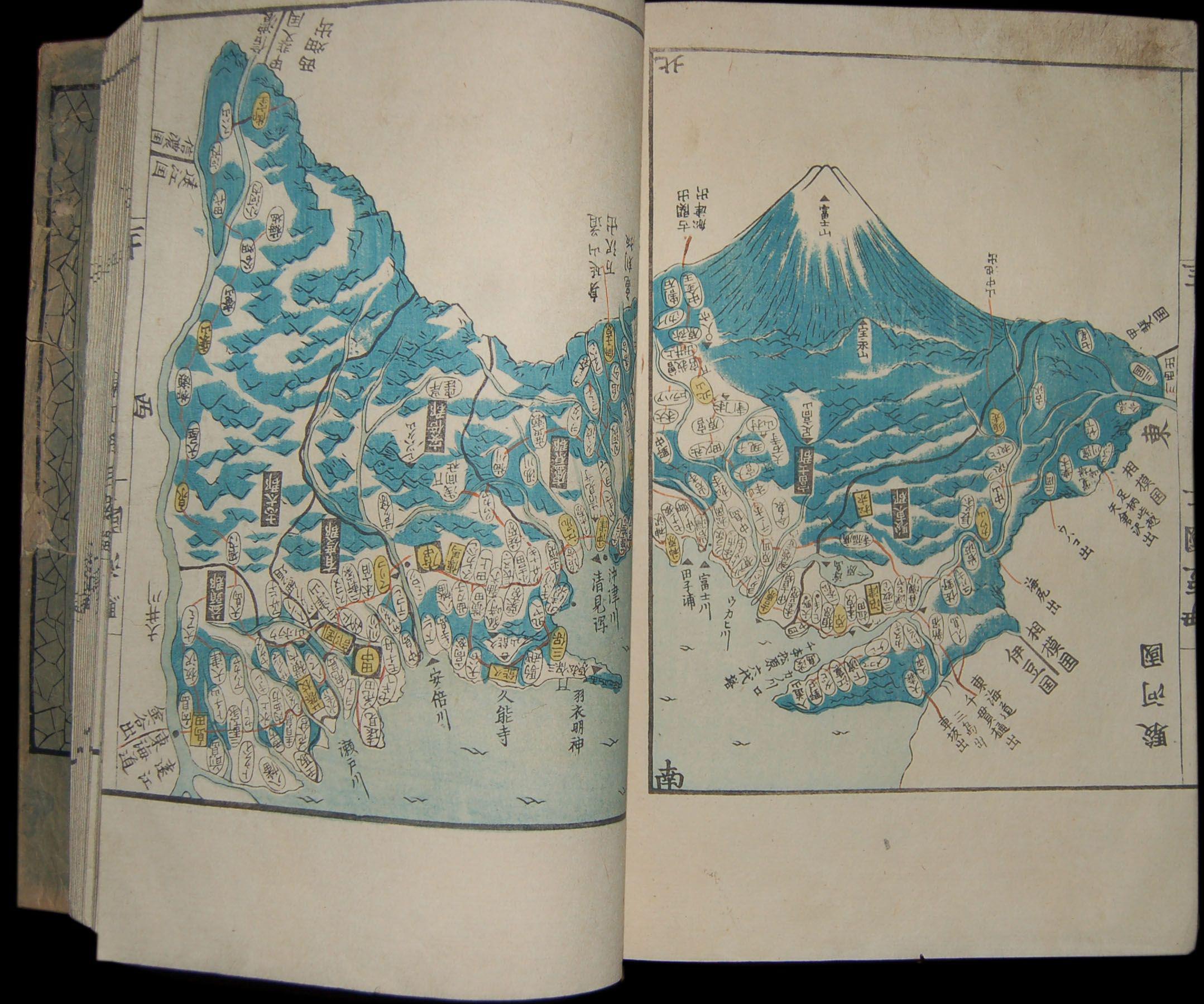
The Ino Map is often described as surprisingly accurate. But does that mean it was as accurate as a modern map?
Not quite. It was not a GPS-level map. It was made in the Edo period, long before satellites, aerial photography, or modern surveying instruments. Even so, it was an extraordinary achievement because it combined field measurement, direction records, and astronomical observation on a nationwide scale.
The impressive part is not that it had no errors. The impressive part is that, under Edo-period conditions, Ino Tadataka and his teams brought the shape of Japan so close to a measured reality.
What was accurate about it?
The Ino Map is especially strong around coastlines, roads, ports, capes, islands, and other places the survey teams actually measured.
Ino Tadataka did not simply sketch what he saw. His teams measured distance, recorded direction, checked position through observations of the sky, and assembled those field records into maps.
If you want a quick interactive version of that coastline-following idea, try Ino Tadataka Stepper. It is not a reproduction of the Ino Map, but a small game for feeling how a measured route grows along the shore.
That gave the map several strengths:
- coastlines were drawn with unusual detail
- surveyed routes preserved a practical sense of distance
- ports, capes, islands, and place names could be read in concrete relation to one another
- Japan was described through a more consistent surveying standard than earlier compiled maps
Earlier maps of Japan existed, of course. But many depended on regional documents, reports, and inherited map traditions. The Ino Map mattered because it pushed the map closer to measured fieldwork.
Where were the limits?
The Ino Map still contains errors. When seen across very wide areas, some regions show east-west displacement or other distortions.
One major reason is that longitude was much harder to determine than latitude.
Latitude can be estimated by observing the height of celestial bodies. Longitude requires knowing time differences between places with great precision. Today that sounds ordinary, but in the Edo period it was extremely difficult without modern clocks and positioning systems.
So the map is best understood this way: over smaller areas and along measured routes, it can be remarkably convincing; over the whole Japanese archipelago, the limits of Edo-period surveying become visible.
That is not a failure of Ino Tadataka. It is the technical boundary he was working against.
Three kinds of accuracy
It helps to separate “accuracy” into three different questions.
1. Shape
This means how well the map captures coastlines, bays, capes, islands, and the outline of terrain.
This is where the Ino Map often feels most astonishing. It is not perfect, but for a hand-measured Edo-period map, the density of observation is remarkable.
2. Distance
This means how well the map preserves the measured distance between places.
Ino used pacing and tools such as distance wheels to record travel distance. That made surveyed routes much more reliable than rough visual estimates.
Still, rough terrain, weather, instrument limits, and accumulated measurement error meant that the results were not uniformly exact everywhere.
3. Position
This means where a place sits within Japan as a whole.
Here the latitude and longitude problem becomes important. Latitude could be corrected through astronomical observation more easily than longitude, while longitude remained difficult. That is one reason broader distortions appear.
Why it still matters
The value of the Ino Map is not that it defeats a modern map in precision.
Its real importance is that it tried to measure Japan through a consistent nationwide method. It helped move mapmaking away from inherited outlines and toward organized survey data.
The Geospatial Information Authority of Japan has presented the Ino Map as a starting point for modern Japanese maps. That is because it influenced later mapmaking and helped make Japan legible through measured geography.
The Ino Map is not a modern map. But it is one of the major steps that made modern mapping possible.
The short answer
The Ino Map was not perfect by modern standards, but it was remarkably accurate for an Edo-period measured map.
Its surveyed coastlines and routes are especially impressive. Its broader nationwide positioning still shows limitations, especially around longitude. The best way to appreciate it is not to ask only whether it matches a GPS map, but to ask how far Ino Tadataka got without any of the tools we now take for granted.
Related Articles
- Who Was Ino Tadataka? The Edo Surveyor Who Restarted His Life at 50
- How Did Ino Tadataka Survey? Pacing, Bearings, and the Sky
- Ino Tadataka’s Surveying Tools: The Equipment Behind 40,000 Kilometers
- Ino Tadataka Stepper — tap along Japan’s coastline
- How Accurate Was the Ino Map Compared with World Maps of Its Time?
- What Is the Dai-Nihon Enkai Yochi Zenzu? The Formal Name of the Ino Map, Explained
References
- Geospatial Information Authority of Japan: Ino Tadataka
- Geospatial Information Authority of Japan: Special Exhibition on the Ino Maps
- Library of Congress: Maps of the Japanese Coastal Areas (Ino Maps)
Footscroll
Walk Ino Tadataka's Journey With Your Own Steps
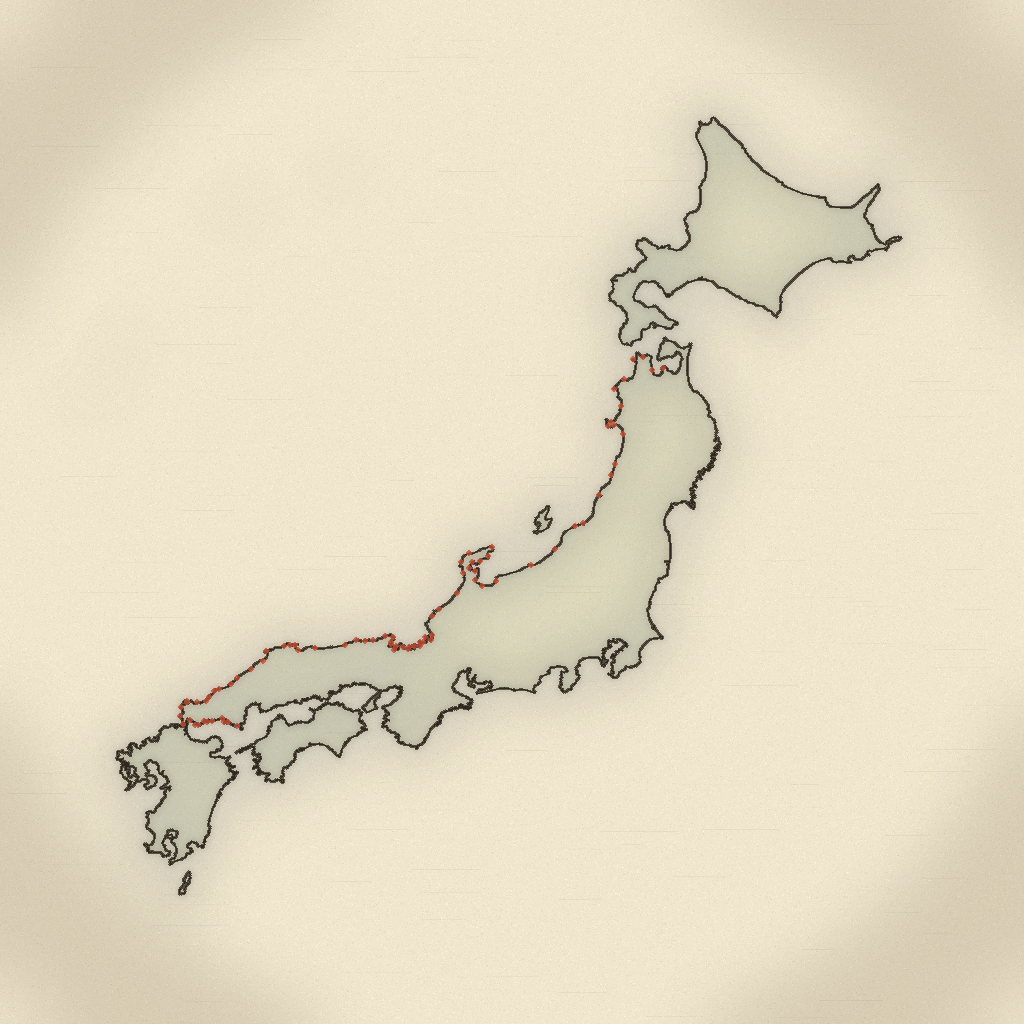
Footscroll turns your daily step count into a quiet journey across a washi-style map of Japan, inspired by Ino Tadataka's survey routes.