If You Can’t Stick With Squats, You May Not Need More Motivation — You May Need Tracking
Starting squats isn’t actually that hard.
You don’t need equipment. You don’t need a gym. You already know roughly how to do one. That’s why so many people say, at least once, “I’ll start today.”
But it doesn’t last.
At that point, most of us reach for the same explanation: maybe I just don’t have enough discipline.
But the real issue may be different.
Without tracking, even good intentions are hard to sustain.
This article looks at why tracking supports a squat habit, and what kind of tracking actually makes consistency easier.
Without tracking, your effort doesn’t stay visible in your mind
A squat session doesn’t change your body in a dramatic way overnight.
- You did 10 today
- You did 15 yesterday
- You’re slightly ahead of last week
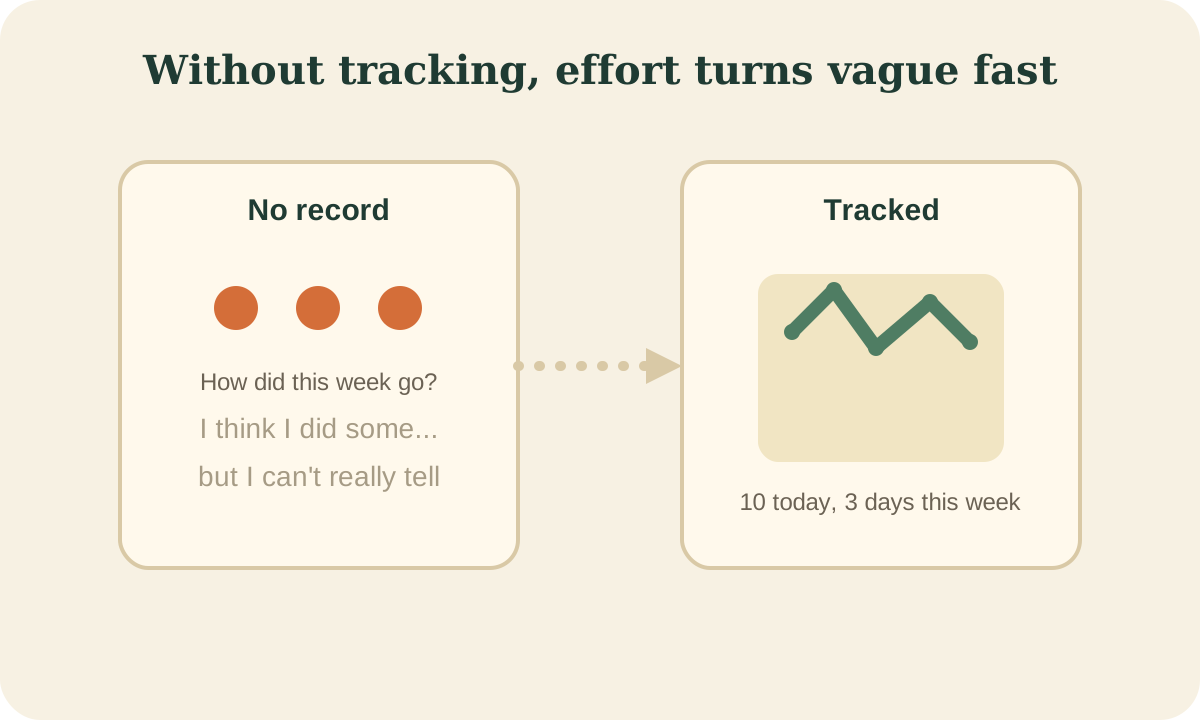
Without a record, those facts disappear fast.
You might feel like “I haven’t done anything this week” even though you managed three days. Or you might think you’ve been fairly consistent when, in reality, you only did one session.
Without tracking, both effort and neglect become blurry.
And blurry behavior rarely becomes a habit.
Tracking is not about policing yourself. It’s about making your behavior visible
For some people, tracking sounds harsh.
But its real role isn’t control. It’s visibility.
That’s an important difference.
- Today was zero
- But yesterday was twenty
- This week is still slightly better than last week
- The streak is still alive
Once you can see your behavior, you stop thinking in absolutes like “I’m doing nothing.” You start seeing where you actually are.
Habit-building is often less about perfection and more about position. Walking without a map is exhausting. Knowing your current location makes the next step easier.
People who stay consistent don’t only look at total reps
When people track squats, they often focus only on cumulative count.
That matters. But it isn’t the whole picture.
1. Did I do it today?
At the beginning of a habit, the most important thing is often not volume. It’s whether the action happened at all.
Five reps may be tiny, but five is still much closer to a habit than zero.
2. How many days in a row?
Streaks create their own momentum.
Once you’ve done something for several days in a row, “I don’t want to break this” becomes a real emotional force. That’s not heroic willpower. It’s a natural response to continuity.
3. What does my recent pace look like?
A lifetime total of 1,000 squats sounds impressive, but habits are built by recent rhythm, not by historical pride.
What matters is whether you did nothing this week, or whether you kept a steady three sessions.
Tracking makes “just a little today” feel meaningful
One of the best things about tracking is that it gives even a small session a real purpose.
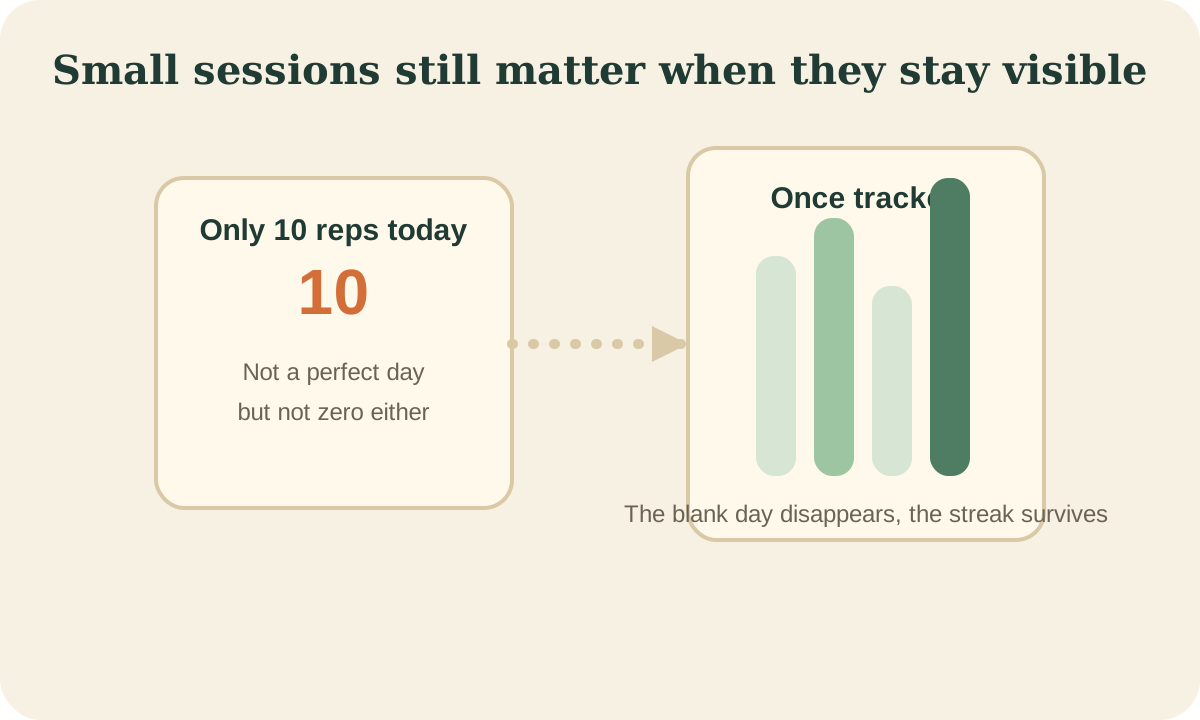
Maybe today you’re tired. Thirty squats feels impossible. But ten might still be realistic.
Without tracking, those ten reps can feel too small to matter.
With tracking, they do matter.
- The streak stays alive
- The heatmap avoids a blank square
- The week’s rhythm doesn’t fully collapse
In other words, small effort keeps its meaning.
That alone makes a habit much harder to lose.
When squats don’t stick, the problem isn’t always motivation
This is the part worth remembering.
Squats are a quiet exercise. No applause. No score. No visible transformation the moment you finish. For the brain, that makes them easy to deprioritize.
Tracking compensates for that weakness.
With tracking,
- effort stays visible
- change becomes legible
- streaks gain weight
- even small sessions count for something
In other words, you rebuild the reason to continue every day.
It’s much more useful to say “I need a better structure” than “I need stronger willpower.”
If you want tracking to become a system
If you’re thinking, “I understand why tracking matters, but I don’t want to log everything by hand,” that’s completely reasonable.
Habits need tracking. But if tracking itself becomes annoying, the habit still dies.
LegScroll is built to auto-count squats while making these things visible in one flow:
- immediate feedback
- daily completion
- streaks
- long-term accumulation
If you want the broader argument first, Why Squats Are the Best Exercise — and Why You Still Can’t Stick With Them is the companion piece.
Summary
When squats don’t stick, the missing piece may not be motivation. It may be tracking.
- Without records, effort becomes vague
- With records, you can see where you actually are
- Total reps matter less than recent rhythm and continuity
- Small sessions keep their meaning when they are visible
Tracking is not a punishment. It’s a way of turning behavior into something you can keep.
If you want consistency, the shortest path may not be more determination. It may be a system that makes your effort stay visible.
If you want the “how many should I even start with?” question first, How Many Squats Should Beginners Do? A Simple Way to Start Without Burning Out is the companion article.