Why Squats Are the Best Exercise
“If you could only do one exercise for the rest of your life, what would it be?”
Ask any fitness expert, and there’s a good chance the answer is the same.
Squats.
The reason is simple. Squats engage the largest muscle groups in the human body — the quadriceps, hamstrings, and glutes — all at once.
Why Squats Are So Efficient
Training efficiency, roughly speaking, comes down to how many muscles you can activate in a single movement.
Squats are the quintessential compound exercise — a movement that works multiple joints simultaneously.
- Quadriceps (front of the thigh) — the largest muscle in the body
- Glutes (buttocks) — the most powerful muscle in the body
- Hamstrings (back of the thigh)
- Core (abs and back) — engaged throughout to maintain posture
Push-ups and crunches are great exercises, but almost nothing matches squats in total muscle recruitment.
Training large muscles translates directly to higher basal metabolism, better fat burning, and stronger bone density. As we age, lower-body strength matters more than ever — making squats an investment that appreciates over time.
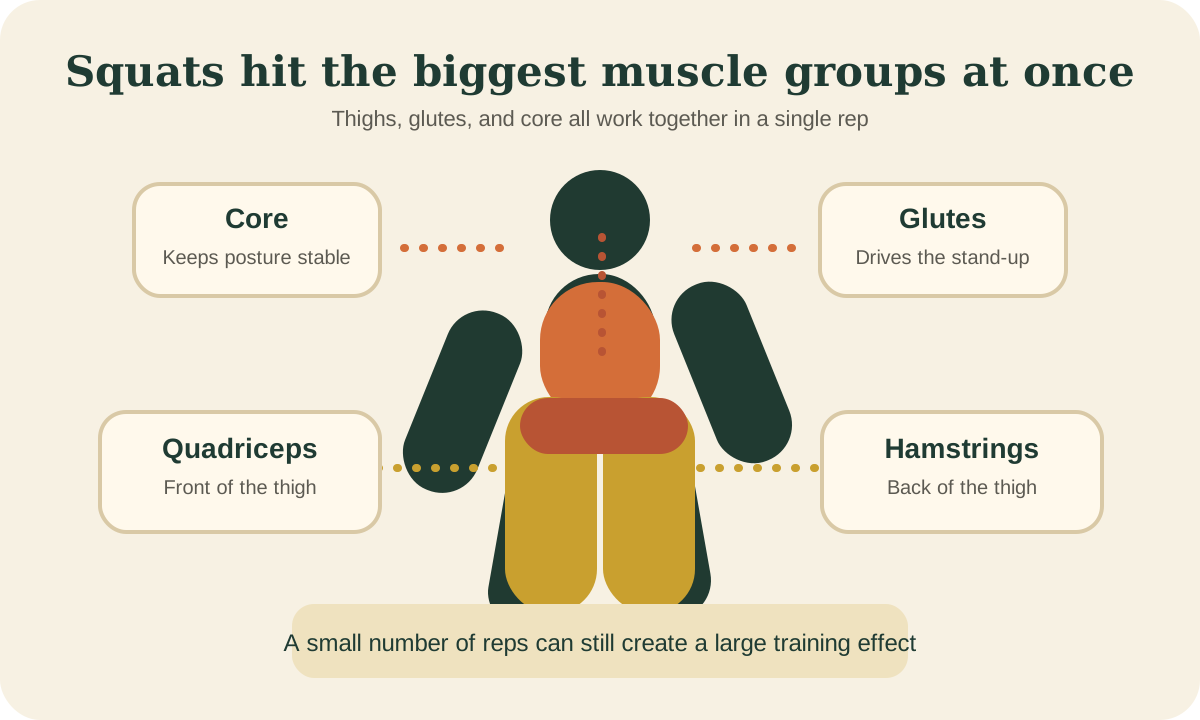
Squats may look like a leg exercise, but they pull the core into the movement as well. That’s why each rep does more work than it seems.
No Equipment. No Gym. No Excuses
You don’t need a gym membership. No dumbbells, no mat. If you can stand, you can squat.
This zero-barrier entry is another reason squats are called the king of exercises.
On a trip. During a work break. In the living room after the kids fall asleep. Few exercises fit into every chapter of life the way squats do.
And Yet, Almost Nobody Sticks With Them
At this point, it seems like there’s no reason not to squat.
But in reality, very few people maintain a squat habit.
Why?
It’s not because people don’t know how. Everyone knows what a squat looks like.
The problem is you can’t remember why you should do them every single day.
The starting barrier is low, but the middle is where motivation fades. That’s the hidden gap most squat habits fall into.
The Real Reasons People Quit
When you look at research and surveys on exercise drop-off, the same patterns keep emerging.
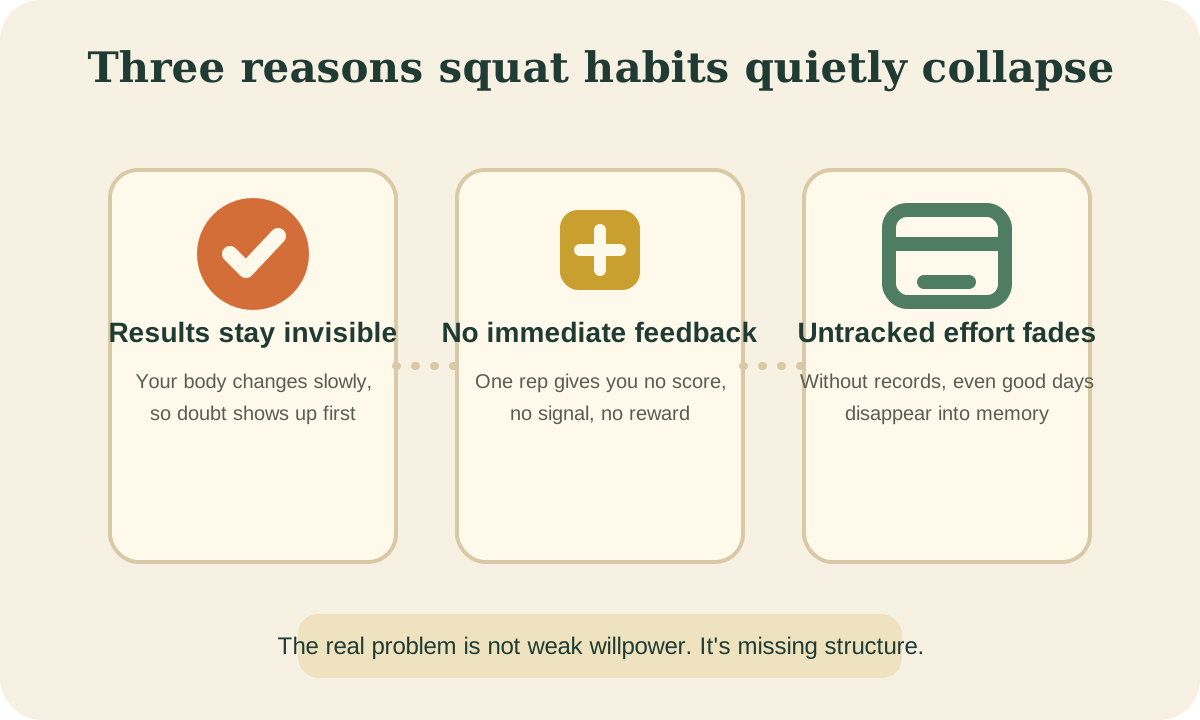
1. Results are invisible
The effects of strength training aren’t visible in days. It takes weeks to months before you can feel a real difference. Until then, you’re fighting a constant “is this even working?” doubt.
2. No feedback
A single squat earns no applause, no score, no level-up. You just bend and stand. The human brain deprioritizes actions that produce no immediate feedback.
3. Without records, effort becomes vague
“How many times did you squat this week?” Most people can’t answer. Without records, there’s no sense of achievement and no awareness of skipping. Everything stays vague — until one day you realize you simply stopped.
4. Nothing breaks if you skip
Missing a squat day doesn’t cause anything to fail. No deadline, no penalty. So “I’ll skip today” stretches into forever.
What You Need Isn’t Willpower — It’s a System
Here’s the important insight.
People don’t fail at exercise because they lack willpower. They fail because they lack a system.
Behavioral science tells us that habit formation depends on:
- Immediate feedback — something comes back the moment you act
- Visible progress — accumulation you can see
- Streaks — the psychology of “I don’t want to break the chain”
- Milestone goals — a distant goal broken into small, reachable steps
Games keep you playing for hours because every one of these elements is baked in.
Flip that around: build the same elements into exercise, and the odds of sticking with it go up dramatically.
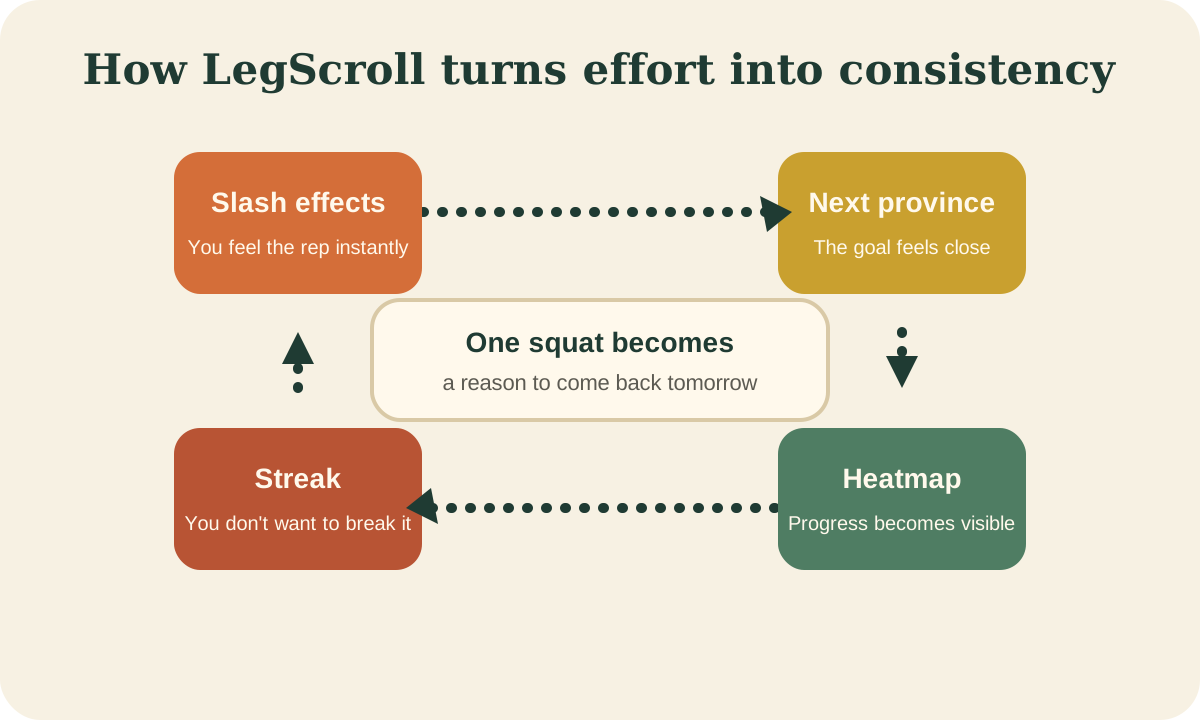
One action becomes a visible result, that result becomes a record, and that record becomes a reason to come back tomorrow. Consistency is often just that loop made visible.
How LegScroll Builds a System for Consistency
LegScroll is an app that embeds exactly these “consistency mechanics” into squats.
Slash Effects = Immediate Feedback
Every detected squat triggers a slash effect on screen. Perfect form earns a golden “Divine!” animation.
This isn’t decoration. It’s a signal to the brain that says “you did something” — injecting feedback into a motion that normally has none.
Nobunaga’s Dream = Milestone Goals
Conquer all 84 ancient Japanese provinces based on your cumulative squat count. The epic goal of national unification is broken into small milestones: “just one more province.”
“30 more squats and I take the next province” — that feeling of being close keeps you going a little longer.
365-Day Heatmap = Visible Progress
Like GitHub’s contribution graph, your year of squats is visualized as a heatmap. Darker green means more reps. Blank days stand out — and you’ll want to fill them.
When your record is visible, both your wins and your misses are honest. That honesty sustains consistency.
Achievement Streaks = The Chain You Won’t Break
Consecutive days of hitting your daily goal are counted. When you’re on a 14-day streak, skipping feels like a real loss.
This isn’t sunk-cost thinking. It’s a positive feedback loop: the more you do, the more reasons you have not to stop.
Don’t Rely on Willpower
Squats are one of the most efficient, most accessible, and most beneficial exercises you can do.
But that’s not enough to keep going. The human brain doesn’t work that way.
What matters is having a system that moves your body even on days when motivation is zero.
Effects. A map. Records. Streaks.
These aren’t fun extras. They’re the structural engineering of habit.
Whether you’re starting squats for the first time or you’ve quit more times than you can count, borrowing the power of a system is a perfectly rational choice.
If you want to go deeper on why tracking matters so much, If You Can’t Stick With Squats, You May Not Need More Motivation — You May Need Tracking is the companion piece.
If you’re curious, take a look at LegScroll.