Why Do Humans Use Base 10?
We use numbers so naturally that we rarely stop to question them.
1, 2, 3, 4, 5, 6, 7, 8, 9, 10.
School arithmetic, prices, scores, and everyday counting all sit on top of base 10.
But if you pause for a moment, it is a little strange.
Why 10?
Why not base 8, or base 12?
The most common answer is simple:
Because humans have 10 fingers.
That is a big part of the story. But the more interesting part comes after that. Base 10 is not just a random rule that came from having ten fingers. It makes more sense if you see it as a case where human bodies and human habits gradually turned into a civilizational standard.
Math feels abstract, but counting starts with the body
Math often looks abstract and formal.
Counting, however, starts from somewhere much more physical. Before paper, calculators, or written notation, people first had to count with what they already had: their bodies.
The most convenient tool was the hand.
- One hand gives you 5
- Two hands give you 10
That “both hands full” feeling became a natural unit.
What matters here is that 10 did not spread because it was mathematically perfect from the start. It spread because it was easy for humans to handle.
So base 10 began less as a theory and more as a practical habit.
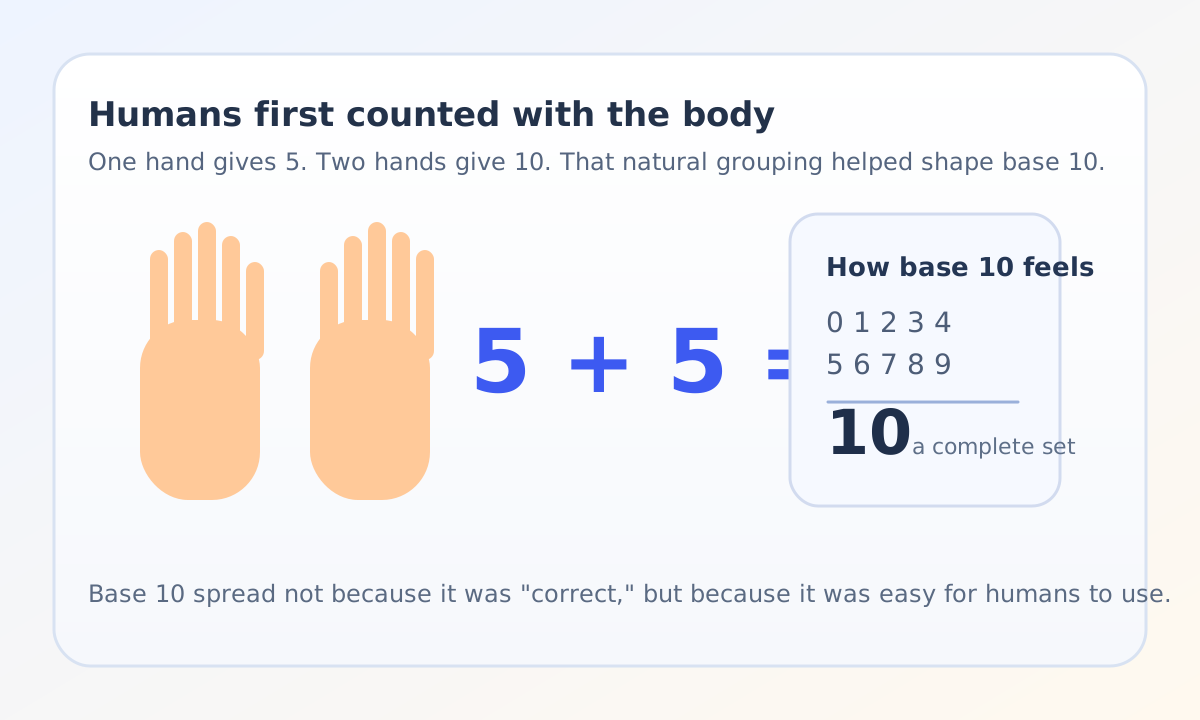
One hand gives 5, two hands give 10. That simple bodily grouping helps explain why base 10 feels so natural.
Base 10 is not “correct.” It is just very human-friendly
It is easy to think of base 10 as standard and everything else as unusual.
But number bases do not have one universally correct form.
- Computers run on binary
- Programmers often use hexadecimal
- Time and angles still preserve traces of base 60
That means base 10 is not a law of the universe. It is simply the system that felt most natural to human beings in everyday life.
That is what makes it interesting.
We tend to treat numbers as objective and impersonal, but even they are shaped by something very human. In that sense, base 10 is a counting system optimized for the human body.
Ten became dominant not only because of fingers
If we stop at “because we have 10 fingers,” the explanation gets a little too shallow.
Different cultures have also used patterns closer to base 5 or base 20. That makes sense too. If hands help you count, feet can easily enter the picture as well.
So why did base 10 become so strong?
One good answer is that 10 feels natural to the body while also fitting everyday life at a useful scale.
- 5 can feel a bit small
- 20 can feel a bit large
- 10 often feels just right
Ten works as a body-based grouping and as a practical social grouping. That balance is part of its strength.
Why does reaching 10 feel satisfying?
We often treat 10 as more than just a number.
- a score out of 10
- top 10
- 10-step ratings
- “let’s do 10 and stop there”
Why does 10 feel so naturally like a milestone?
Part of it is education, of course. We are raised inside base 10. But that is not the whole story.
Ten has the feeling of a completed set.
You count from 0 to 9, and then the place value changes. That shift creates a sense that something has been completed and a new stage has begun.
That is why 10 often carries a feeling of completion, not just quantity.
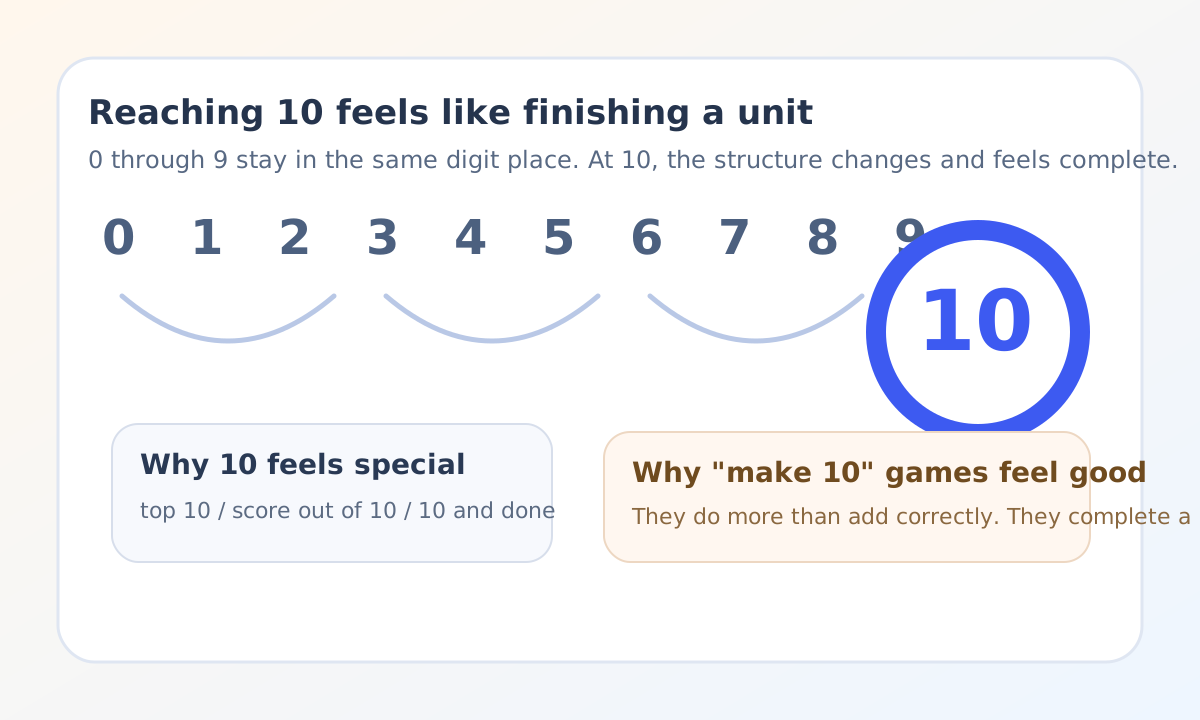
0 through 9 stay in the same digit place. At 10, the structure changes. That jump helps create the feeling of a completed unit.
That is why “make 10” games feel surprisingly natural
If humans already experience 10 as a natural boundary, then games built around “making 10” will often feel intuitive too.
When numbers add up to 10, something more happens than just a correct calculation. It feels like a whole unit has clicked into place.
That is why these games can feel both simple and satisfying.
They are not only math games. They are tapping into a structure our minds already find natural.
That is also why many people can understand them quickly, even on first contact.
That feeling is exactly what Tashitama turns into a game
Tashitama takes that “making 10 feels good” sensation and turns it into something fast and playable.
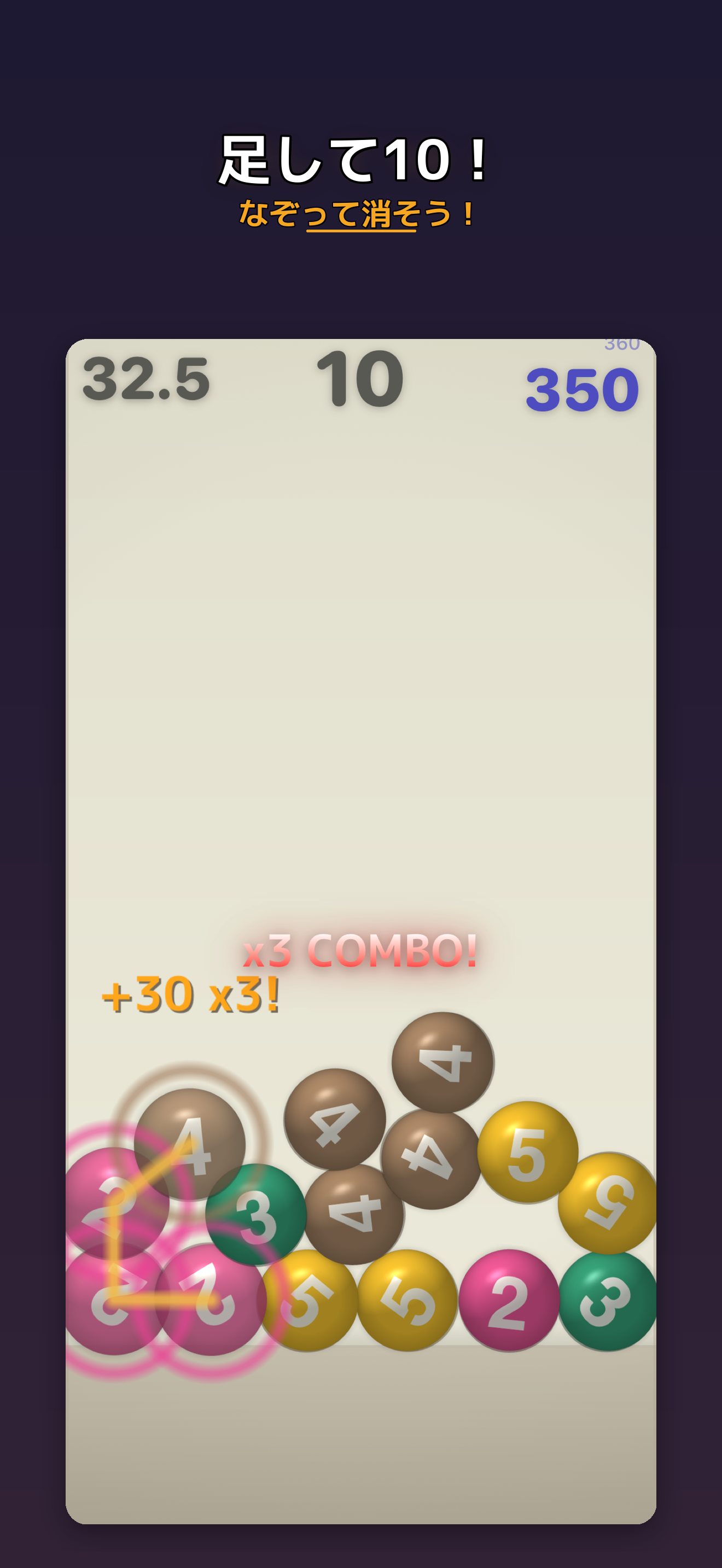
In Tashitama, you trace numbered balls and clear them by making totals of 10.
5 + 53 + 3 + 3 + 12 + 2 + 2 + 2 + 2
The rule is simple, but the game feels good because the rule already matches a familiar way of thinking. It is not just arithmetic. It is the satisfaction of completing a pattern your brain already likes.
That is what makes it feel intuitive instead of educational in a dry way.
Summary
Humans use base 10 partly because we have 10 fingers. But that is only the beginning.
Behind it, there is a much richer story:
- humans first learned numbers through the body
- 10 fit everyday life at a useful scale
- 10 became tied to feelings of completion and milestones
- that same structure still shapes what feels intuitive in games and culture
Base 10 is not just a calculation rule. It is evidence that human bodily experience became part of civilization’s default settings.
If the idea of “making 10 feels good” sounds interesting, you can try that feeling directly in Tashitama.