A Wadokei Was Not Just a Japanese-Looking Clock
When people hear wadokei, they may imagine a wooden clock case, old metalwork, or a traditional dial.
But the most interesting part is not only the appearance. It is the fact that time itself was organized differently.
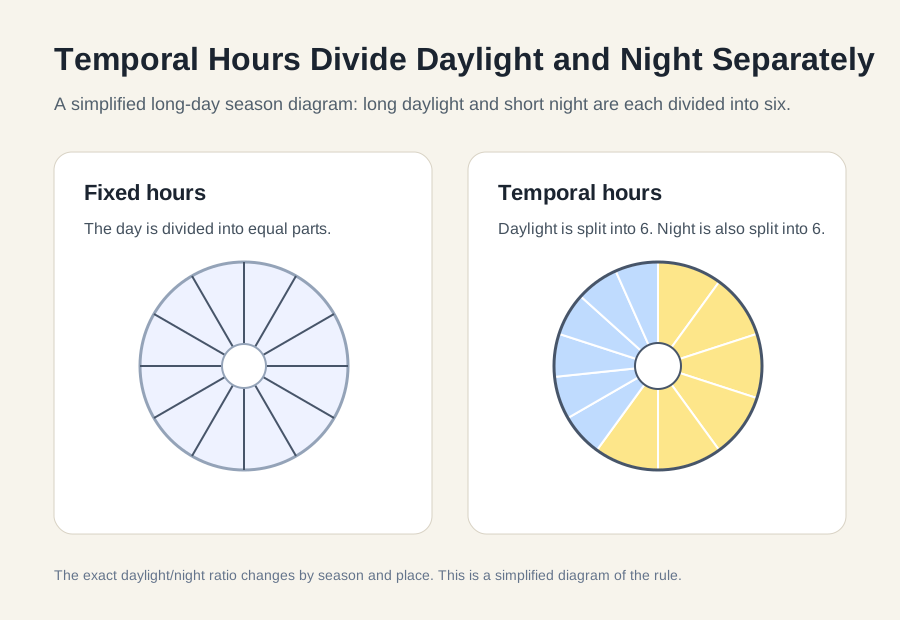
Modern clocks divide the day into 24 equal hours. One hour in the morning, one hour at noon, and one hour at night all mean the same 60 minutes. This is fixed-hour time.
In Edo-period Japan, time was often read through a temporal-hour system. Daylight, from dawn to dusk, was divided into six parts. Night, from dusk to the next dawn, was also divided into six parts. In summer, daytime hours became longer; in winter, they became shorter.
A wadokei was a clock that tried to serve this flexible time system.
For example, on a summer-like day, temporal hours divide the long daylight span into six parts, and the shorter night span into six parts too. That is why a daylight “hour” can be longer than a night “hour.”
What Were Temporal Hours?
The Seiko Museum Ginza explains that the Japanese temporal-hour system divided the day into daytime and nighttime, then divided each into six parts called ittoki or koku.
For a modern reader, this is the strange part: an “hour” did not always have the same length.
In summer, daylight is long, so each daytime division becomes longer. Night is shorter, so each nighttime division becomes shorter. In winter, the balance reverses.
Edo time was not a rigid grid. It was a way of reading the day through dawn, dusk, and the changing length of light.
| View | Modern fixed hours | Edo temporal hours |
|---|---|---|
| Day structure | 24 equal parts | 6 daylight parts + 6 night parts |
| Hour length | Always the same | Changes by season and day/night |
| Reference | Equal clock divisions | Dawn and dusk |
| Feeling | Time that coordinates society | Time that follows nature |
Zodiac Hours
Edo-period time also used the twelve zodiac signs:
- Ne
- Ushi
- Tora
- U
- Tatsu
- Mi
- Uma
- Hitsuji
- Saru
- Tori
- Inu
- I
For example, uma no koku is often treated roughly as the noon period. But with temporal hours, the boundaries were not as fixed as a modern clock reading. They moved with the season.
That is why wadokei were mechanically interesting. They had to deal with a time system that was tied to natural light rather than equal hours.
How Did Wadokei Adapt?
The hard part was simple to state: mechanical clocks like to move evenly, but temporal hours do not.
The Seiko Museum Ginza explains that wadokei used approaches such as changing the speed of the hand movement or changing the dial markings to fit temporal hours.
So it was not enough to import a European mechanical clock and leave it unchanged. The clock had to be adapted to Japanese timekeeping.
That is why wadokei developed distinctive forms: tower clocks, pillar clocks, portable clocks, and other mechanisms suited to local use.
The fascinating part is this:
The clock was not simply forcing people into mechanical time. It was trying to bend itself toward the rhythm of life and daylight.
Wakeikoku’s Wadokei Mode Is a Reconstruction
Wakeikoku includes a wadokei-inspired digital display in the Seijaku scene.
But it is not a literal reproduction of historical temporal hours.
If you reproduce temporal hours exactly, the length of one koku changes with season, dawn, and dusk. That is historically fascinating, but it can be difficult to read as a calm everyday desk clock.
Wakeikoku therefore uses a simplified modern reading:
- one koku = 2 hours
- one sun = 6 minutes
- one bun = 30 seconds
It is not a scholarly reconstruction. It is a modern, readable expression inspired by the vocabulary and atmosphere of wadokei.
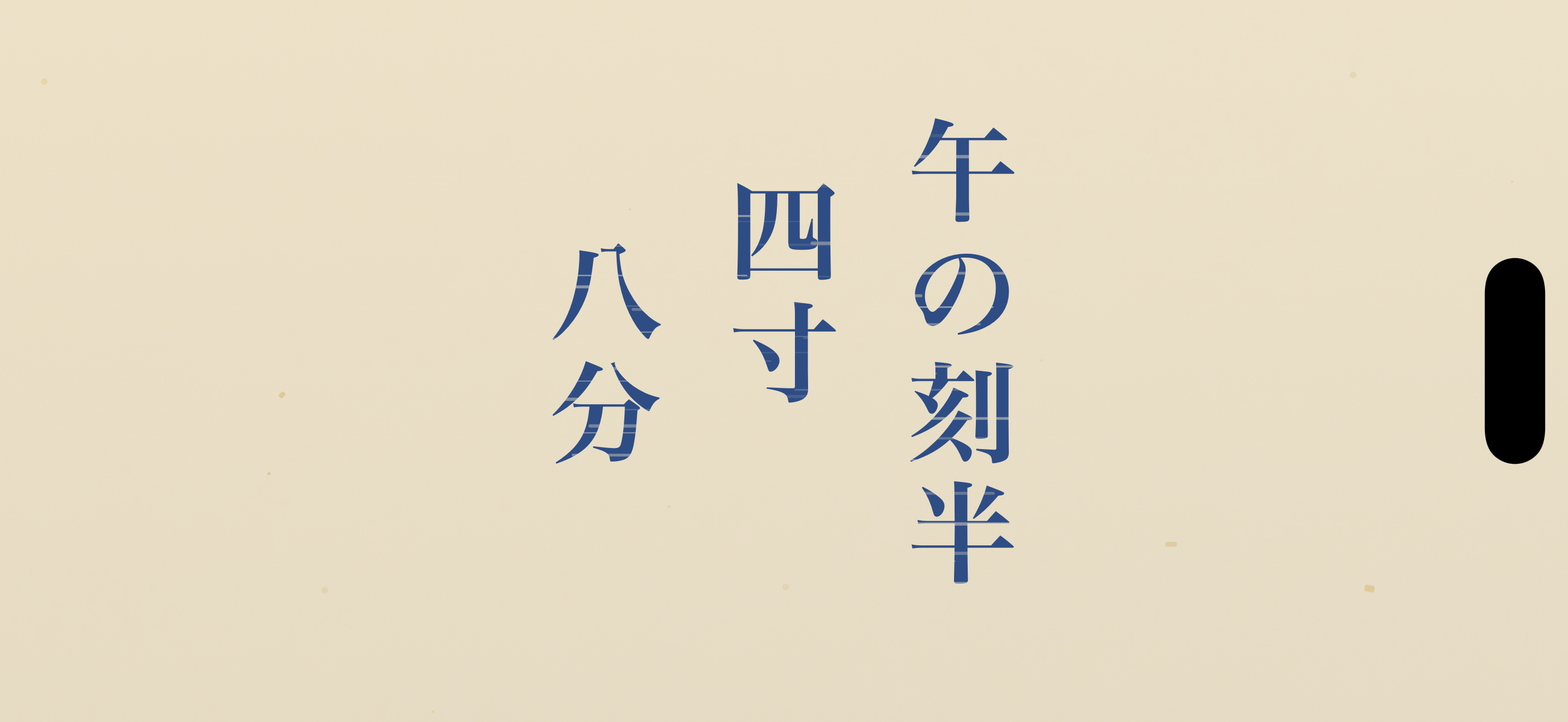
This choice fits Wakeikoku’s purpose. It is not trying to be a museum instrument. It is trying to place a quiet Japanese time-scene on your desk.
A Softer Sense of Time
Modern time is extremely useful.
Meetings, trains, notifications, deadlines — everything depends on equal minutes and seconds. But sometimes that kind of time can feel hard.
Wadokei and temporal hours remind us that time can also be felt through light, dawn, dusk, season, and atmosphere.
Wakeikoku borrows that feeling. Not to replace accurate timekeeping, but to soften how time appears beside you while you work.
Related Reading
- How Wakeikoku Was Made: The Story Behind a Japanese Desk Clock App
- Wakeikoku - Japanese Ambient Scenery
References
- Seiko Museum Ginza: What is a Wadokei?
- Seiko Museum Ginza: Temporal-hour explanation
- Seiko Museum Ginza: Traditional Japanese clocks
Wakeikoku
Keep a Quiet Japanese Scene on Your Desk
Wakeikoku turns your charging iPhone into a calm Japanese landscape clock with washi textures, ink scenery, stars, moon phases, and a modern wadokei mode.