The Short History of Reversi
Place a disc. Trap the opponent’s discs. Flip them.
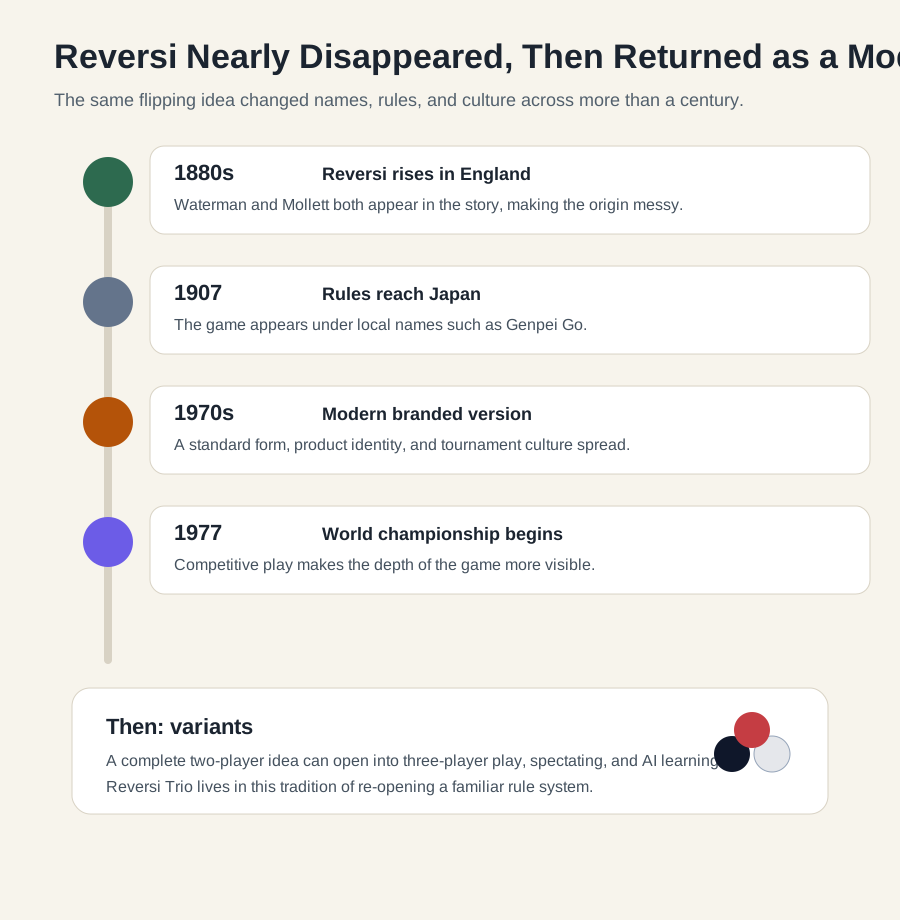
Reversi is usually traced to late-19th-century England. It later faded from view, then returned in Japan in the 1970s as the modern branded game Othello, becoming both a household board game and a competitive classic.
Reversi is easy to explain, but it is not shallow. Every move can change the board dramatically, and a position that looks good in the middle game can collapse near the end. That gap between simple rules and deep consequences is why the game keeps coming back.
It did not arrive as one finished object. It appeared in 19th-century England, faded, returned as a modern branded game in Japan, developed a tournament culture, and now lives on in apps, AI play, and variants such as three-player Reversi.
This article follows that line: not only who invented it, but why a simple flipping game could survive across so many names and forms.
Trademark note: Othello is a registered trademark. This article uses the name only when referring to the historical branded game or official competitive culture. For the general game form and Reversi Trio, it uses “Reversi.”
When Did Reversi Begin?
The history usually begins in late-19th-century England.
The World Othello Federation’s history page describes Reversi as being formalized in England in the 1880s, with both Lewis Waterman and John W. Mollett appearing in the story. Mollett had an earlier related game called The Game of Annexation, while Waterman’s Reversi became the name that stuck.
That early Reversi was not yet the continuous global classic we know today. It became popular near the end of the 19th century; Ravensburger is reported to have produced it in 1893. But it did not develop the same unbroken competitive culture as chess or Go.
In other words, Reversi was a game that caught attention, then almost slipped out of sight.
When Did Reversi Reach Japan?
Reversi did not suddenly appear in Japan in the 1970s.
The WOF history notes that Reversi had reached Japan by 1907, where it was presented under local names such as Genpei Go. That makes sense: the visual drama of sides changing color is easy to translate into local metaphors.
But early arrival was not the same as cultural permanence. The rules entered Japan, but the broader boom still needed a stronger product identity, a standard form, and a public playing culture.
That change came in the 1970s.
When Did Othello Become Popular?
In the 1970s, the modern branded version known as Othello was commercialized in Japan.
The Japan Othello Association states that Othello is a registered trademark, and MegaHouse’s official product page notes that the Othello name appeared on the board when it was released in 1973. The Japan Times also reported that Goro Hasegawa pitched the game to Tsukuda, and that it was officially released under the Othello name in 1973.
The important point is not only the rule set.
A game becomes durable when rules, name, board, pieces, starting position, books, tournaments, and public identity all hold together. Nineteenth-century Reversi had the flipping idea. The modern branded version gave that idea a sharper cultural package.
The name itself mattered. It was memorable, tied to the black-and-white visual identity, and gave the game a story people could repeat.
Are Reversi and Othello the Same?
In everyday speech, people often use Reversi and Othello as if they mean the same thing. The boards and rules are close enough that most people think of both as “the game where you trap and flip discs.”
Legally and historically, though, the names are not interchangeable.
The Japan Othello Association’s trademark rules state that Othello is a registered trademark and that products such as board games, computer games, books, and related goods using the mark require permission.
So this article treats the names this way:
| Name | How this article uses it |
|---|---|
| Reversi | The broader game form and historical general name |
| Othello | The modern branded game, official competitive name, and registered trademark |
| Reversi Trio | mikocode’s three-player Reversi app |
Using a trademarked name to discuss its history is different from using it as the name of an app or product. That is why Reversi Trio uses “Reversi” as its general game-language base.
Why the Rule Survived
Reversi survived because the board changes fast.
One move is simple. The result can flip a whole line. Those flipped discs can flip back later. The game looks readable, then refuses to stay read.
That makes it friendly at the start and sharp later on. You do not need to memorize how many different pieces move. But you quickly learn that taking many discs early is not always good, corners matter, and the endgame can undo everything.
Reversi’s strength is the short distance between simple rules and deep consequences.
That made it work as a family game, a tournament game, a computer game, and eventually an app game.
What Happens When a Two-Player Classic Gets a Third Player?
Reversi is beautifully tuned as a two-player game.
With two players, the relationship is clean: me versus you. A bad result for the opponent is usually good for me. That makes the reading sharp and direct.
Add a third player, and the structure changes:
- If A attacks B, C may benefit.
- Taking a corner can expose a side to someone else.
- A runaway leader becomes the shared target.
- Flipping too many discs can make you visible.
This is not the same as the history of Reversi, but it grows naturally from Reversi’s central pleasure: the board can change all at once.
Two-player Reversi is about reading an opponent.
Three-player Reversi is about reading relationships.
That difference is explored more deeply in Why Are Three-Player Games So Different?.
Reversi Trio as a Continuation
Reversi Trio is a three-player Reversi app.
It is not just a familiar rule with one more player added. It takes the central feeling of Reversi — sudden flips, visible momentum, late reversals, and readable-but-not-quite-readable boards — and places it inside a three-way relationship.
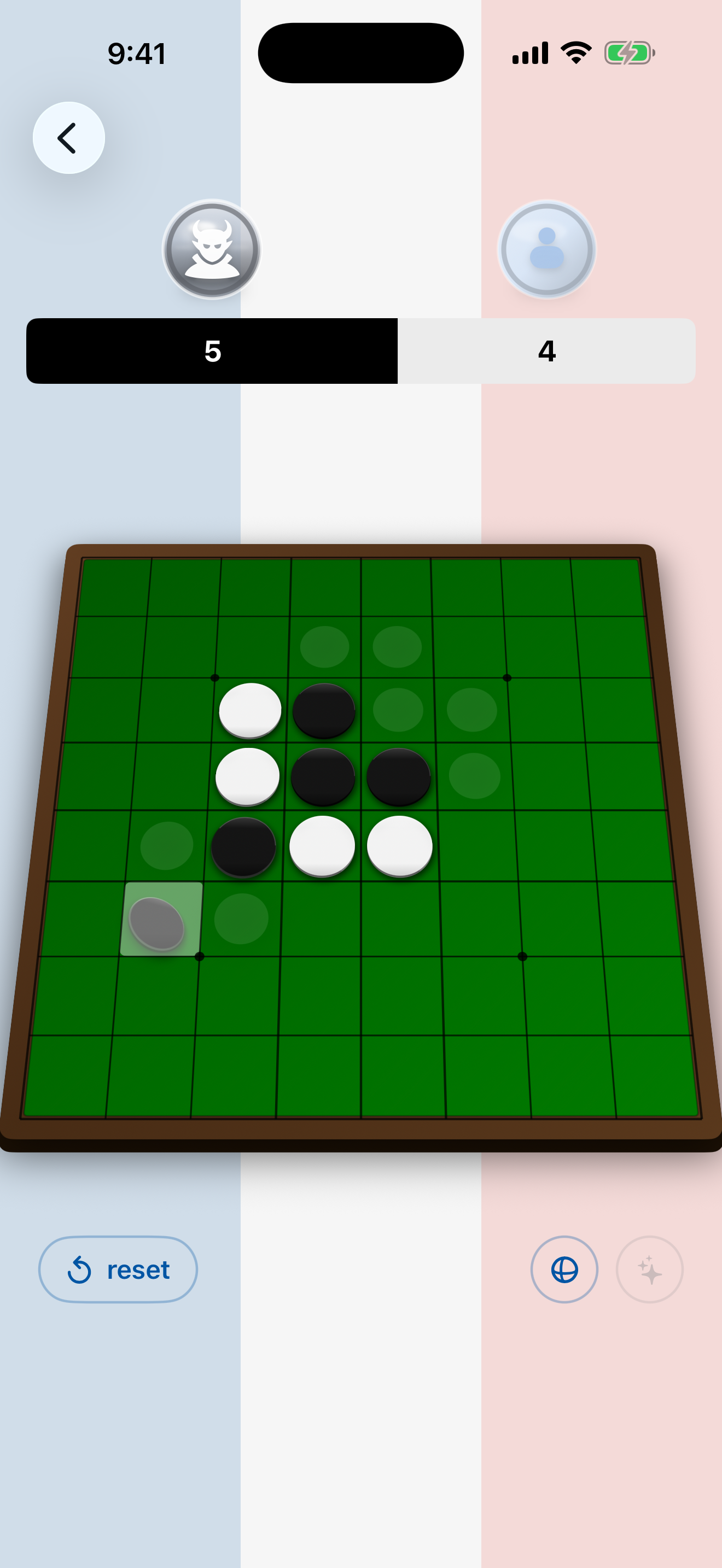
The classic reading game stays intact: one opponent, one clean tension.
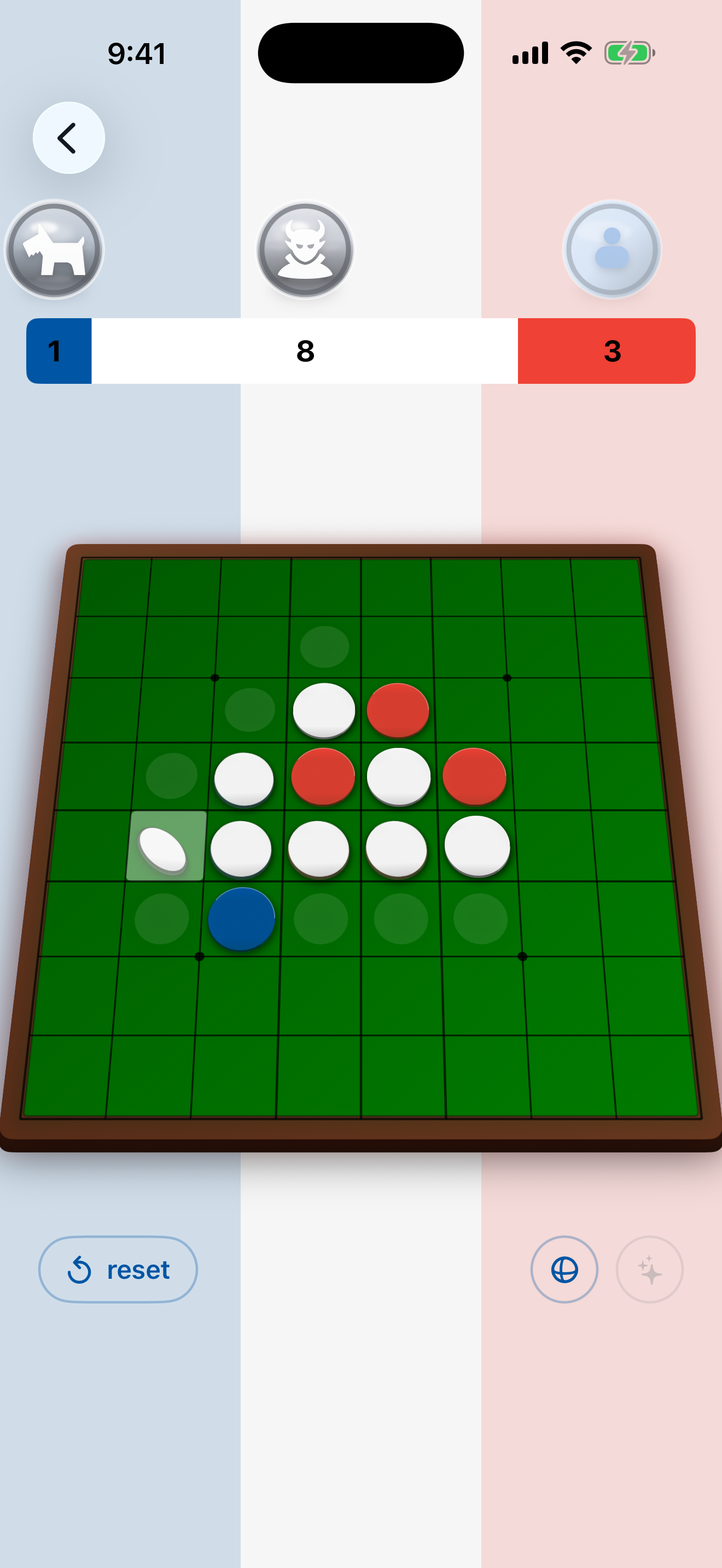
The same flipping rule becomes a game of pressure, timing, and shifting targets.
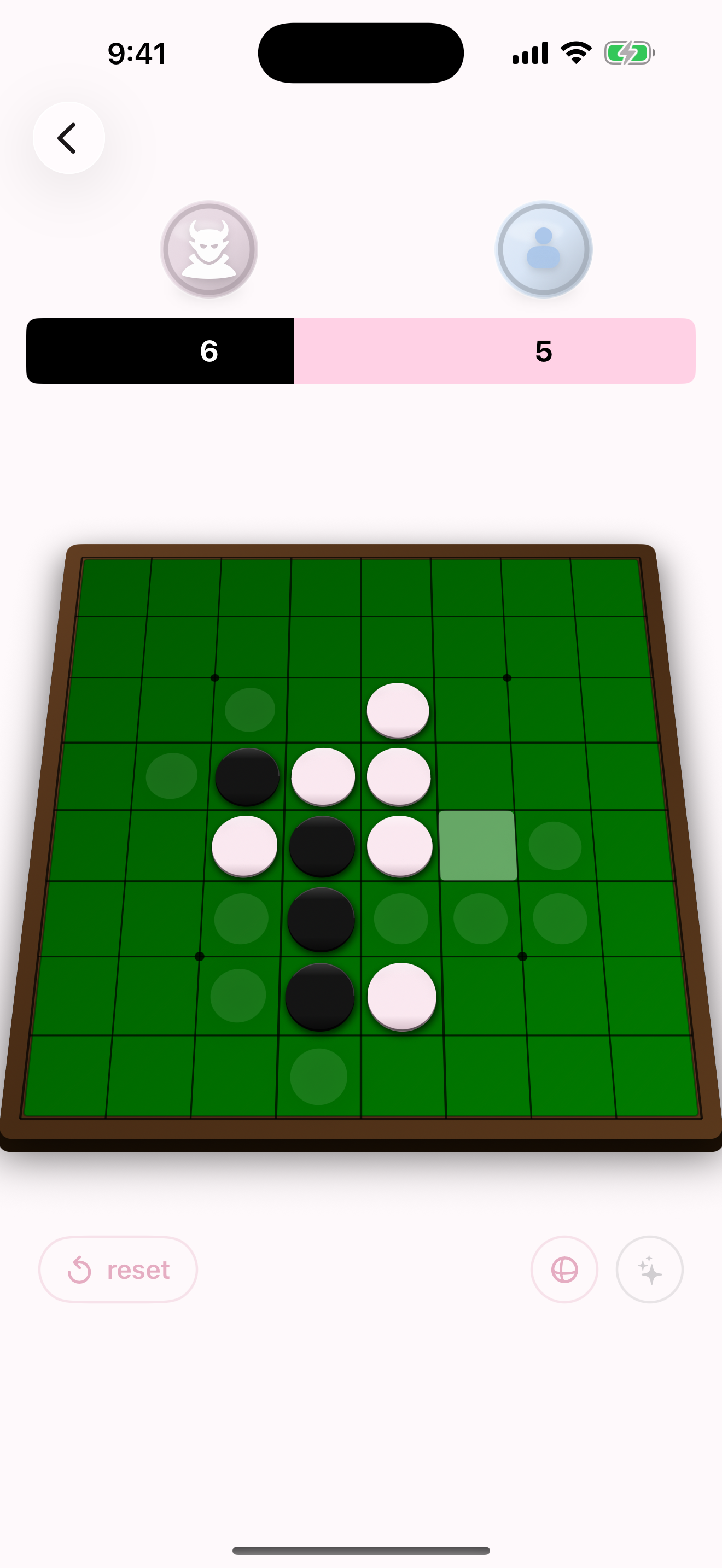
A learning AI turns a familiar board into a way to notice your own habits.
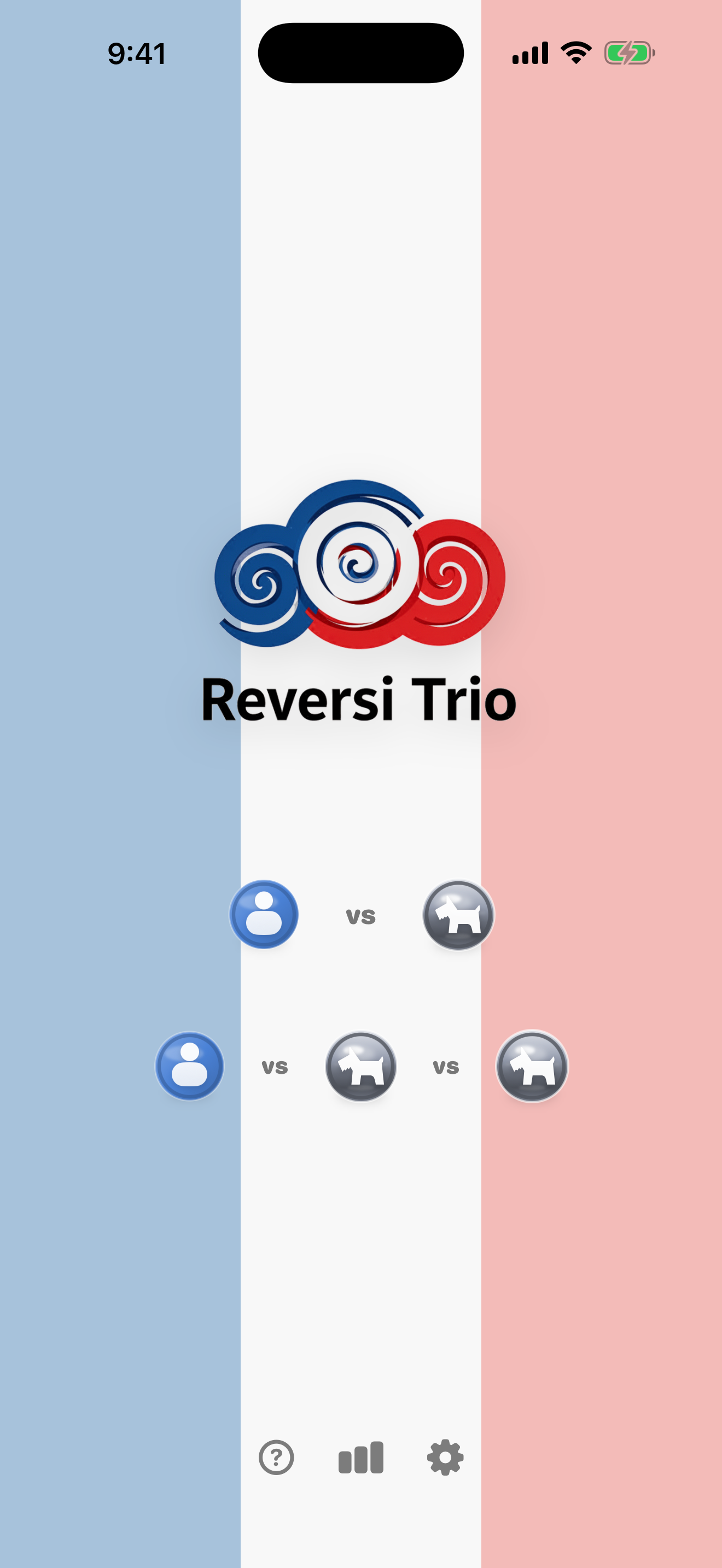
A familiar two-player idea opens into three-player play, spectating, and AI learning.
Seen through history, that does not feel strange. Reversi has already changed names, products, cultures, and platforms. A three-player variant is another way a durable rule system continues to breathe.
Classic games do not survive only by staying fixed. They survive because their core still works when a new generation bends the form.
The Short Version
Reversi’s history is not a straight line.
- It rose in 19th-century England.
- It reached Japan before the modern boom.
- It returned in the 1970s as a modern branded game.
- Tournament culture made its depth more visible.
- Apps and variants keep reopening the idea.
That makes three-player Reversi less of a gimmick and more of a continuation: another attempt to ask what happens when a simple flipping rule is placed in a new social shape.
If that sounds interesting, take a look at Reversi Trio.
Related Reading
- Why Are Three-Player Games So Different?
- Reversi Trio - three-player play, spectator mode, and learning AI
References
- World Othello Federation: The early years
- World Othello Federation: The history of the WOF
- Japan Othello Association: trademark rules
- MegaHouse: Official Othello board
- The Japan Times: Goro Hasegawa, inventor of board game Othello, dies at 83

Reversi Trio
Try Reversi as a Three-Player Game
Reversi Trio takes the familiar flipping rule and opens it into three-player battles, spectator mode, and a learning AI called Mirror.